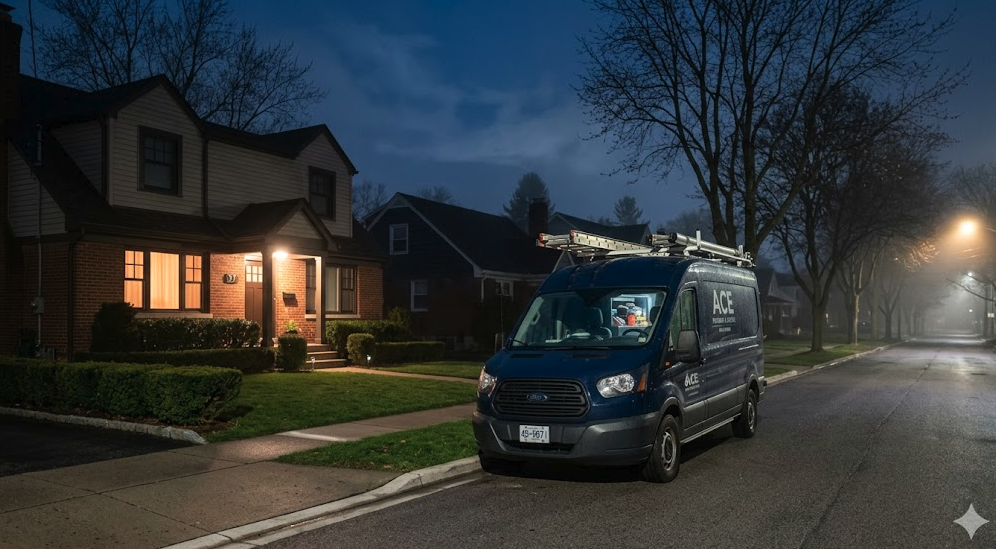
You're on a job. Pipe's out, water's off, customer's watching. Your phone rings in your pocket.
You let it go.
That's not a failure. That's what it looks like to be a good plumber. You finish the job in front of you. You do the work right. The phone gets dealt with later.
The problem isn't that you didn't answer. The problem is "later" sometimes means the caller already booked someone else.
A plumbing answering service fixes that gap — not by making you a better business manager, but by handling the phone while you do the work you're actually there to do.
Here's how they work, what they actually do, and how to know if one makes sense for you.
Simple version: your phone rings, someone answers it. Not voicemail. Not a callback from you four hours later. An actual response, while you're still on the job.
That response can do a few things depending on how you set it up:
Answers in your name. The caller thinks they reached your company. They get a person, not a menu, not a machine. They get to talk to someone who knows what a main shutoff is.
Takes the job details. Name, address, what's going on, how urgent. Everything you'd ask if you picked up yourself — collected and sent to you clean.
Books the appointment. If you're connected to scheduling software like Jobber or Housecall Pro, the job goes straight into your calendar. No phone tag, no follow-up required.
Sorts what's urgent. A burst pipe and a slow drain aren't the same call. A good answering service knows the difference and handles them accordingly — getting you on the line when it matters, taking a message when it doesn't.
That's it. The phone rings. The customer gets answered. You find out what came in. Job gets booked. You kept your head down and finished the work.
Most businesses can get away with voicemail. Customers will leave a message, wait for a callback, stay in the queue.
Plumbing doesn't work that way.
When someone calls a plumber, something's usually wrong. They're not browsing. They're not comparing options at their leisure. They've got water coming through the ceiling or no heat or a toilet that hasn't worked since Tuesday. They're calling three numbers and going with whoever picks up.
You don't need to be the best plumber in town to win that call. You just need to answer it.
That's the whole game. First response wins the job. And right now, if you're in the field six, eight, ten hours a day, you're not winning it as often as you could be.
Not every answering service is the same. Here's what's actually out there:
Live answering services put real people on your phones. Trained agents who answer in your company's name, handle the caller, and send you the summary. The experience is good — it feels like talking to someone in your office, even though your office might just be your truck. These cost more, usually priced by the minute or on a monthly plan.
AI answering is newer and moving fast. Instead of a human agent, an AI picks up, has a real conversation with the caller, collects their information, and books the job. It handles calls at any hour, doesn't take breaks, and costs less than a live service. For most callers, the experience is indistinguishable from talking to a person. For straightforward calls — new customer, needs a quote, here's my address — it's exactly what you need.
Hybrid services use automation for the intake and escalate to a human when something gets complicated. Good option if you want the coverage without paying live-agent rates on every call.
For a solo operator or small crew, AI answering tends to make the most economic sense. One job covers months of service. The setup is simple. It runs while you work.
Not a dashboard. Not a CRM integration to manage. Not a new thing to learn.
What you should get: the phone answered, the customer taken care of, a clean summary of what came in. That's it.
If an answering service is adding work to your day instead of removing it, it's not set up right. The whole point is that you're fully on the job — tools in hand, head down — and the phone is just handled. You check the summary when you're done. You call back the ones worth calling back. You already have the job booked.
The simpler it runs, the better it's working.
A plumbing job — even a basic one — runs a few hundred dollars. An emergency call runs more. An answering service costs somewhere between the price of dinner and the price of one hour of your labor, per month.
You catch one call you would have missed. It pays for itself. The rest is upside.
The buyer who figures this out stops thinking about whether to get an answering service and starts thinking about which one to use.
A few things actually matter. Most of what gets marketed doesn't.
It answers. Every time. Morning, evening, mid-job. If there are gaps in coverage, calls fall through. Simple requirement, worth confirming.
It books the job, not just takes a message. Messages create follow-up work. Booked jobs don't. If your answering service can connect to your scheduling tool, use that feature.
It sends you clean summaries. You shouldn't have to dig through call logs to figure out what came in. A brief, clear summary of every call — who, what, when — sent to your phone. Done.
It's simple to start. If setup takes a tech team and three weeks of configuration, that's the wrong fit. You should be live in minutes.
You already know calls are slipping. You don't need convincing. The only question is whether the fix is worth the cost.
For most plumbing owner-operators: one job caught is enough to answer that question.
Vallo answers your calls while you work. Customers get a real response. Jobs get booked. You get a summary. Every call caught before it drops.