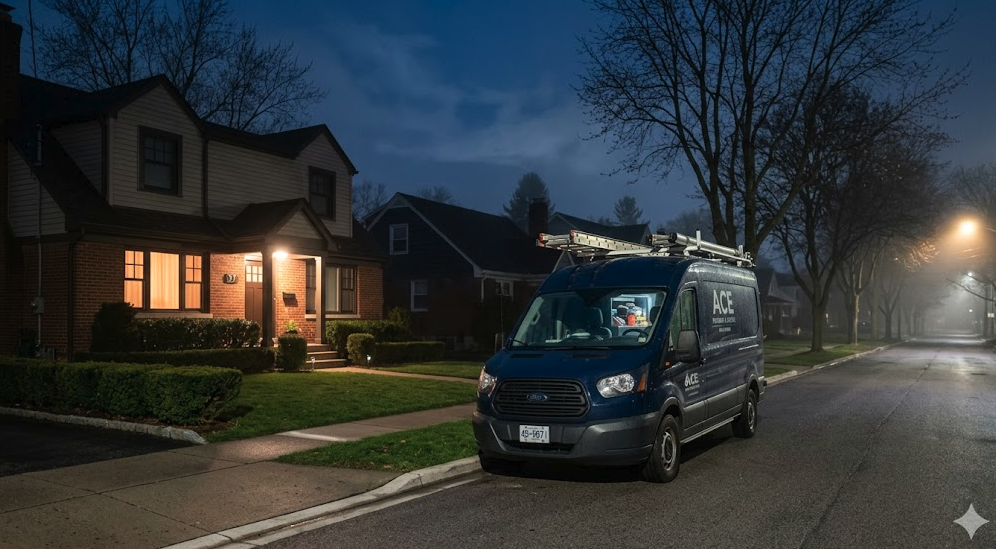
You're three floors up. Or under a sink. Or knee-deep in a job that can't wait. The phone rings.
You can't get to it. That's not negligence — that's the job. Anyone who's actually worked the trades knows you don't stop mid-install to take a call.
But here's the thing about calls that go unanswered: most of them don't wait. They move on. And the calls that come in when you're mid-job — or on evenings, early mornings, weekends — are often the ones worth the most.
When someone calls a plumber in the middle of the afternoon on a Tuesday, they might be patient. They'll leave a message. They'll wait to hear back.
When someone calls because their basement has four inches of water in it at 8pm on a Saturday, they're calling every number they can find until someone picks up. The first plumber who answers gets that job. Not the best plumber in town. The one who answered.
Those calls — the urgent ones, the after-hours ones, the ones that come in right when you're elbow-deep in something else — are some of the highest-value calls your phone receives. Emergency work runs more. The customer is not price shopping. They want someone now.
If your phone goes to voicemail when those calls come in, the job goes somewhere else.
You set up an answering service. A customer calls. Here's what they experience:
Someone answers. Real voice, real response, your company's name. Not a menu. Not hold music. Not voicemail.
The caller explains what's going on. The service collects what's needed — name, address, what's happening, how urgent. For an emergency, they reach you directly. For something that can wait, they book it and send you the summary.
Your phone stays in your pocket. You finish the job you're on. When you're done, you've got a clean rundown of who called and what they need.
That's the whole sequence. Nothing complicated. No new system to manage. The phone just gets handled.
Most plumbing emergencies don't schedule themselves. Pipe failures, water heater issues, backed-up drains at the worst possible time — these don't wait until Monday at 9am.
If you're only reachable during business hours, you're only competing for a fraction of the available work. The evenings and weekends, when your competition is also unreachable, are where the gap opens up.
A plumbing answering service running outside your working hours doesn't mean you're on call. It means the phone is covered and you hear about it when the job is already booked.
Not every after-hours call is a true emergency. A good answering service knows the difference.
You decide what counts. Flooding, active leaks, no heat in winter, sewage backup — those go straight to you. The caller gets connected, or you get reached immediately. Slow drains and routine estimate requests get handled the normal way: information collected, appointment booked, summary sent.
You're not on call for every call. You're on call when it actually matters.
That's a different thing from having your phone ring at 11pm every time someone has a dripping faucet they noticed before bed.
One emergency plumbing call: $400 to $1,500, sometimes more. An answering service for a small operation: somewhere in the range of $50 to $100 a month.
You catch one after-hours job that would have gone to the next number on the list. You've covered the service for months.
That's not a complicated calculation. It's why plumbers who set this up stop second-guessing it pretty quickly.
A few things matter here specifically:
Coverage that's actually on. Some services have business-hours staffing and lighter coverage overnight. Ask directly: who answers at 10pm on a Sunday? If the answer involves "automated system" or "we'll call back," that's not real coverage.
Emergency routing that works. You need a service that can reach you when something's genuinely urgent — not just take a message and hope you check it in the morning. Test how this works before you rely on it.
Simple escalation. The service handles what it can. When something needs you, it gets to you fast. That chain should be clear and tested.
A summary you can actually read. Not a raw call recording you have to listen to. A short, clear writeup of who called and what they need, sent to your phone when the call ends.
You built a business doing the work. The phone is supposed to support that — not pull you out of it.
An answering service for your calls while you're on a job means you can be fully on the job. Head down, doing it right, knowing the phone is handled. When you're done, the summary's there. The calls got caught.
That's what capacity looks like. Not juggling. Just covered.
Vallo answers your calls while you work. Customers get a real response. Jobs get booked. Every call caught before it drops.