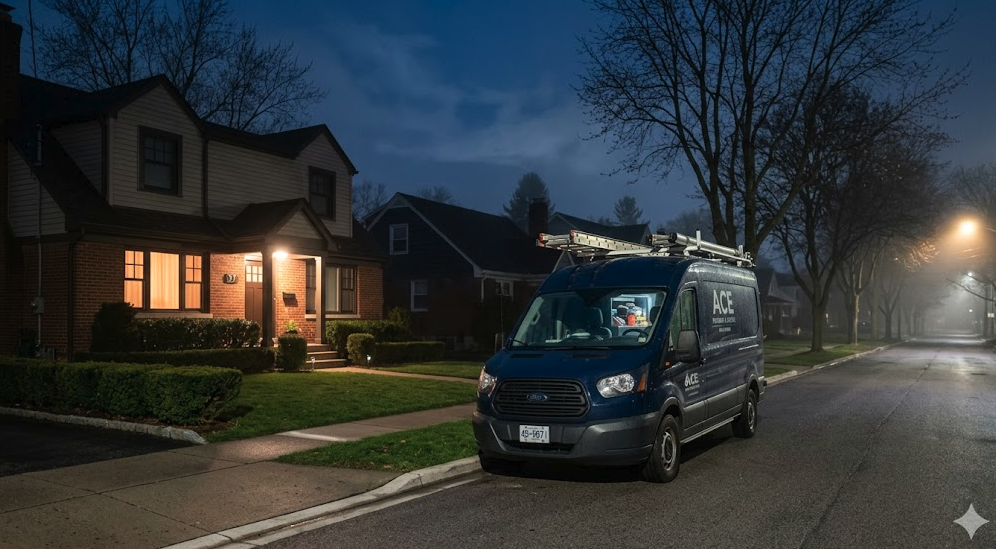
At some point, every plumbing owner-operator hits the same wall.
The business is busy. That's the good news. The phone keeps ringing when you're on a job. That's the problem — not because something's broken, but because there's more work coming in than one person can handle while also doing the work.
You can't answer the phone from under a sink. You can't hire a full-time receptionist for $40,000 a year to cover a small operation. And voicemail isn't working — most people don't leave one.
So the question becomes: do you let someone else handle the calls?
Here's the honest answer.
You're the business and the worker at the same time.
That's the deal when you're running a one-to-five person crew. You're not managing from an office. You're on the jobs. Which means for a significant portion of every workday, you're unreachable.
An outside answering service fills that gap. While you're working, the phone gets answered. Customers get a real response. Jobs get booked. You find out what came in when you surface.
That's not outsourcing a core part of your business — it's adding capacity to a part of your business that you physically cannot cover while doing the actual work.
The math is simple.
An answering service for a small plumbing operation costs somewhere between $50 and $150 a month, depending on call volume and the type of service you use.
A single average plumbing job: a few hundred dollars, minimum. An emergency call: more.
You catch one job you would have missed. The service pays for itself. Everything after that is margin.
You already know this. That's why you're thinking about it.
Voicemail doesn't convert.
Most people who reach voicemail hang up. They don't leave a message. They call the next number.
That's not a knock on your voicemail setup. It's just how people behave when they need a plumber. The urgency is real, alternatives are one tap away, and patience is short. The caller who doesn't reach you doesn't wait — they move on.
An answering service means no caller hits voicemail. Someone picks up, every time.
Setup takes real work upfront.
Getting an answering service running right requires time at the beginning. You need to write a call script — how you want calls answered, what questions to ask, what counts as urgent, how to handle specific situations. If you skip this part, the service will be generic and you'll be disappointed.
Budget a few hours to do it properly. It's a one-time cost that pays off in how well the service represents you.
Quality varies.
Not all services are built the same. A cheap general answering service with high agent turnover and no trades experience will take messages and not much else. A service built for home services and the trades will handle calls the way you would — knowing the vocabulary, knowing when something's urgent, knowing what a plumber actually needs from an inbound call.
The difference in quality is significant. Don't pick the cheapest option without checking whether they've worked with trades businesses before.
It won't replace judgment.
A customer with a tricky problem — an unusual situation, a complicated question about whether something is covered, a caller who needs real expertise — is going to need you eventually. An answering service handles the intake. You handle the rest.
That's the right division of labor. Just know the line.
Here's a realistic picture for a small plumbing operation:
AI answering: $50–$100/month in most cases. Handles calls with natural conversation, books jobs, sends summaries. Fast setup. No per-minute fees. This is what makes sense for most owner-operators starting out.
Live answering (trades-focused): $100–$300+/month depending on call volume. Real agents, trained on home services. Higher quality experience. Better for complex calls or high-volume operations.
Live answering (general): $80–$200/month. Wider range of quality. Works if you put in setup time and train them properly.
Per-minute pricing is common for live services — you pay for actual talk time, usually $1–$2 per minute. If your calls are short and mostly intake, the math works. If calls run long, it adds up.
For most solo or small-crew plumbers: start with AI answering. One job pays for months of service. If you find you need more, upgrade then.
Three questions worth sitting with:
How many calls are you missing right now? If you don't know, pay attention for a week. Check your missed calls. How many came in during working hours when you were on a job? What happened to those callers? If most of them didn't leave a voicemail, they went somewhere else.
What is a job worth to you? If an average job is $400 and an answering service costs $80/month, you need one additional job every two months to break even. Most plumbers who set this up report catching more than that in the first few weeks.
Do you want to keep managing the phone yourself? Be honest. Checking missed calls, playing phone tag, trying to call people back between jobs — that's not where your energy goes farthest. You're better on a job than on a callback.
If the answer to that last one is clear, you probably already know what to do.
Pick a service. Write a script — keep it simple, just the questions you'd ask yourself. Connect it to your scheduling software if you can. Go live.
Then leave it alone and do the work. Check your summaries at the end of the day. Adjust anything that isn't working. After a few weeks, you'll stop thinking about it — because it'll just be running.
That's what it's supposed to feel like. Not a new thing to manage. Just the phone, sorted.
Volley is live in minutes. No tech team, no complicated setup. Your calls get answered while you work. Every call caught before it drops.